Liquid Gold...
Liquid Gold...

.. is what a 25% excise duty on edible oils in the just passed Kenyan finance bill 2024, will sure turn cooking oil to
... is what a 25% excise duty on edible oils in the just passed Kenyan finance bill 2024, will sure turn cooking oil to
.. is what a 25% excise duty on edible oils in the just passed Kenyan finance bill 2024, will sure turn cooking oil to
The passage of the draconian Finance Bill 2024 will transform a routine trip to the supermarket into a Herculean effort for many Kenyans. The bill's severe taxes on essential goods, particularly the proposed 25% excise duty on cooking oil—soon to be "liquid gold"—are set to cause prices to skyrocket. For many families, affording basic necessities will become an almost impossible task.
The once manageable task of wheeling a tub of cooking oil to the checkout counter will feel like an insurmountable challenge, symbolizing the heavy burden placed on ordinary Kenyans struggling to make ends meet under these harsh new economic measures.
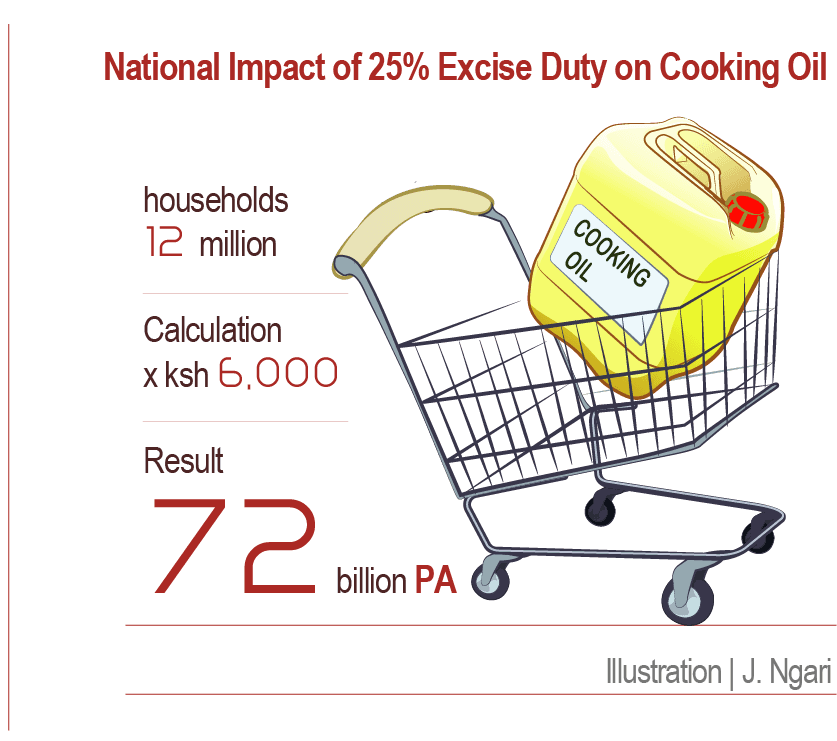
With this new tax, the average price of a liter of cooking oil is expected to rise from KES 200 to KES 250. For a household consuming 10 liters a month, this means an increase from KES 2,000 to KES 2,500, adding an extra KES 6,000 annually to their expenses. Across Kenya's 12 million households, this totals an additional KES 72 billion per year.
Small and medium enterprises (SMEs) are also facing a grim reality. With around 500,000 SMEs relying on cooking oil, the proposed duty will push their monthly expenses from KES 10,000 to KES 12,500. Annually, each SME will incur an extra KES 30,000, amounting to a staggering KES 15 billion collectively.
This financial strain extends beyond the pocketbook. It is likely to lead to reduced consumption of cooking oil by 15%, forcing many to opt for unhealthier alternatives, increasing health issues and subsequent healthcare costs by an estimated KES 5 billion annually. The Finance Bill 2024’s clause imposing this 25% duty will undoubtedly have far-reaching consequences, compounding the daily struggles of Kenyans.
The passage of the draconian Finance Bill 2024 will transform a routine trip to the supermarket into a Herculean effort for many Kenyans. The bill's severe taxes on essential goods, particularly the proposed 25% excise duty on cooking oil—soon to be "liquid gold"—are set to cause prices to skyrocket. For many families, affording basic necessities will become an almost impossible task.
The once manageable task of wheeling a tub of cooking oil to the checkout counter will feel like an insurmountable challenge, symbolizing the heavy burden placed on ordinary Kenyans struggling to make ends meet under these harsh new economic measures.
With this new tax, the average price of a liter of cooking oil is expected to rise from KES 200 to KES 250. For a household consuming 10 liters a month, this means an increase from KES 2,000 to KES 2,500, adding an extra KES 6,000 annually to their expenses. Across Kenya's 12 million households, this totals an additional KES 72 billion per year.
Small and medium enterprises (SMEs) are also facing a grim reality. With around 500,000 SMEs relying on cooking oil, the proposed duty will push their monthly expenses from KES 10,000 to KES 12,500. Annually, each SME will incur an extra KES 30,000, amounting to a staggering KES 15 billion collectively.
This financial strain extends beyond the pocketbook. It is likely to lead to reduced consumption of cooking oil by 15%, forcing many to opt for unhealthier alternatives, increasing health issues and subsequent healthcare costs by an estimated KES 5 billion annually. The Finance Bill 2024’s clause imposing this 25% duty will undoubtedly have far-reaching consequences, compounding the daily struggles of Kenyans.